
The Power Of Deduction
In a strategic context, deduction is both a major element and a critical capability. In the future it will be exponentially more important. With luck, and as discussed elsewhere, we hope that the new tools available alongside will help as the amount of information also increases.
By having more information we can deduce better decisions. By making better decisions we reduce risk significantly.
The Strategic Toolkit has deduction at its core. Every aspect of the approach and the rigorous correlation of perspectives with certain indications is designed to improve deduction.
The Science of Tests
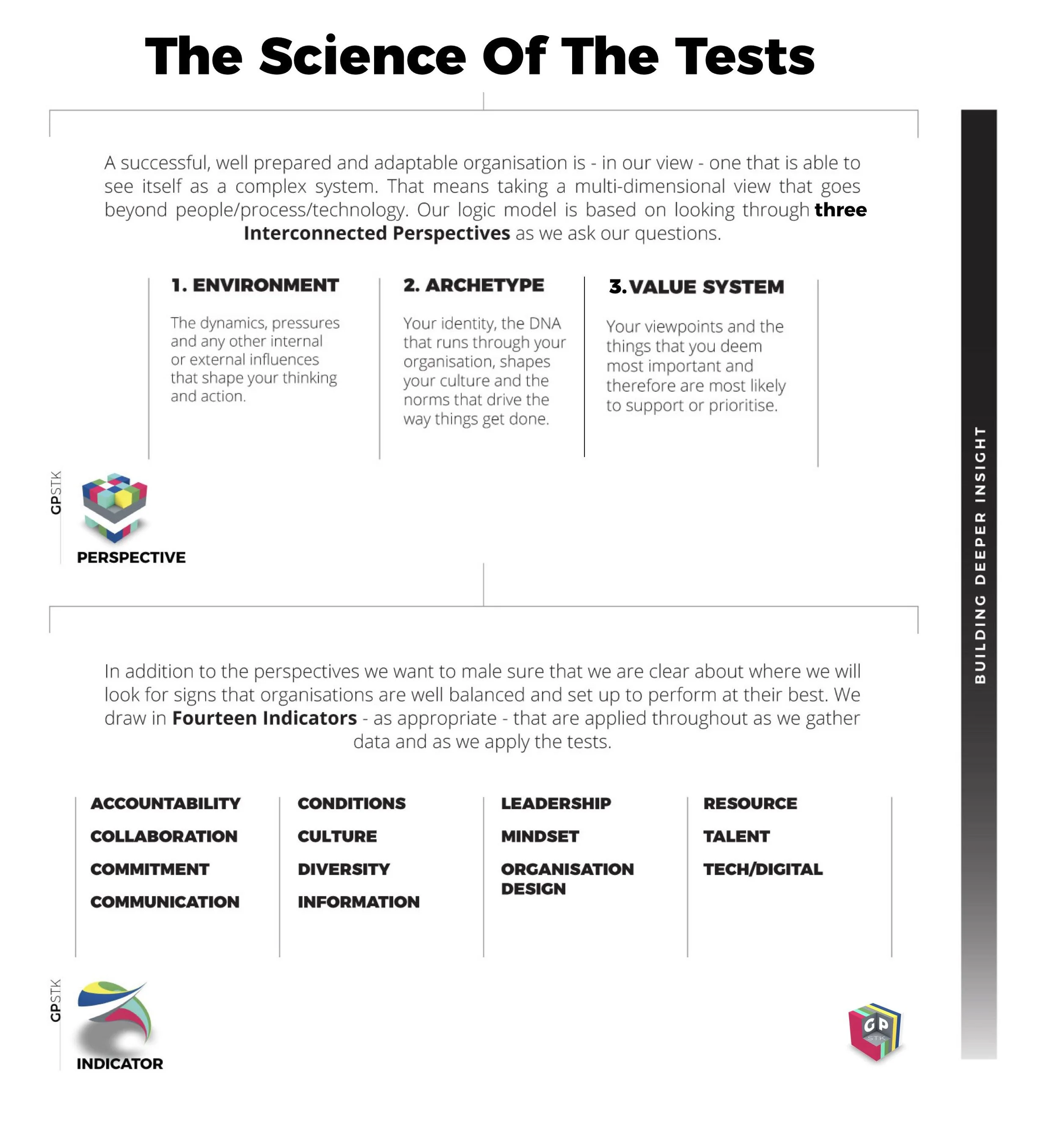
We scan and/or examine an organisation through three different perspectives. This way we can start to determine any unintended or overlooked gaps. These are common in every organisation and can be the difference between success and failure.
The tests explore what we claim to believe versus how we really show up.
Perspective 1: Meaning.
What do things like Prepared, Purposeful and Responsible actually mean to the Organisation? We are establishing the baseline for any given organisation. This assumes that these 3 ‘states’ are what everything else is seeking to achieve.
Our assessment tests how close an organisation is to achieving them. We might argue that the sum of the three equals ‘Sustainability’ by our definition.
Perspective 2: Identity.
What makes us as an Organisation? What drives us, shapes the way we structure ourselves and our resources, and establishes the norms that shape our culture? Where will we most bow down to pressure? What is most likely to attract our attention and how disciplined are we? In this test we are examining the DNA of the Organisation.
Here we look for the contradictions with what is said in Perspective 1.
Perspective 3. Action.
How do we put our thoughts, beliefs and ambitions into action? When the rubber hits the road how do we show up and what gets taken seriously. How good are we at sticking to our plans and practising what we preach? Do we invest in the right things and how insightful are our decisions and opinions? In these tests we are interested in deeds rather than definitions and personalities.
This is where we can show how well aligned an organisation really is
Spotting the Signs
At perspective 1 we are really focused on definition - the organisations definition of the 3 states of sustainability. We want to see what those terms mean to them and to compare that with our point of view.
From this we can either:
Feed that back via a public scan with some observations based on the businesses definitions and where we see ‘red flags’
Use this as a basis for discussion in client engagements to reach a set of definitions that feel right to the client and don’t break any key principles for us. We know there will be differing levels of ‘maturity’.
We are not diving deep into the organisation at this stage. The intention is to establish a benchmark.
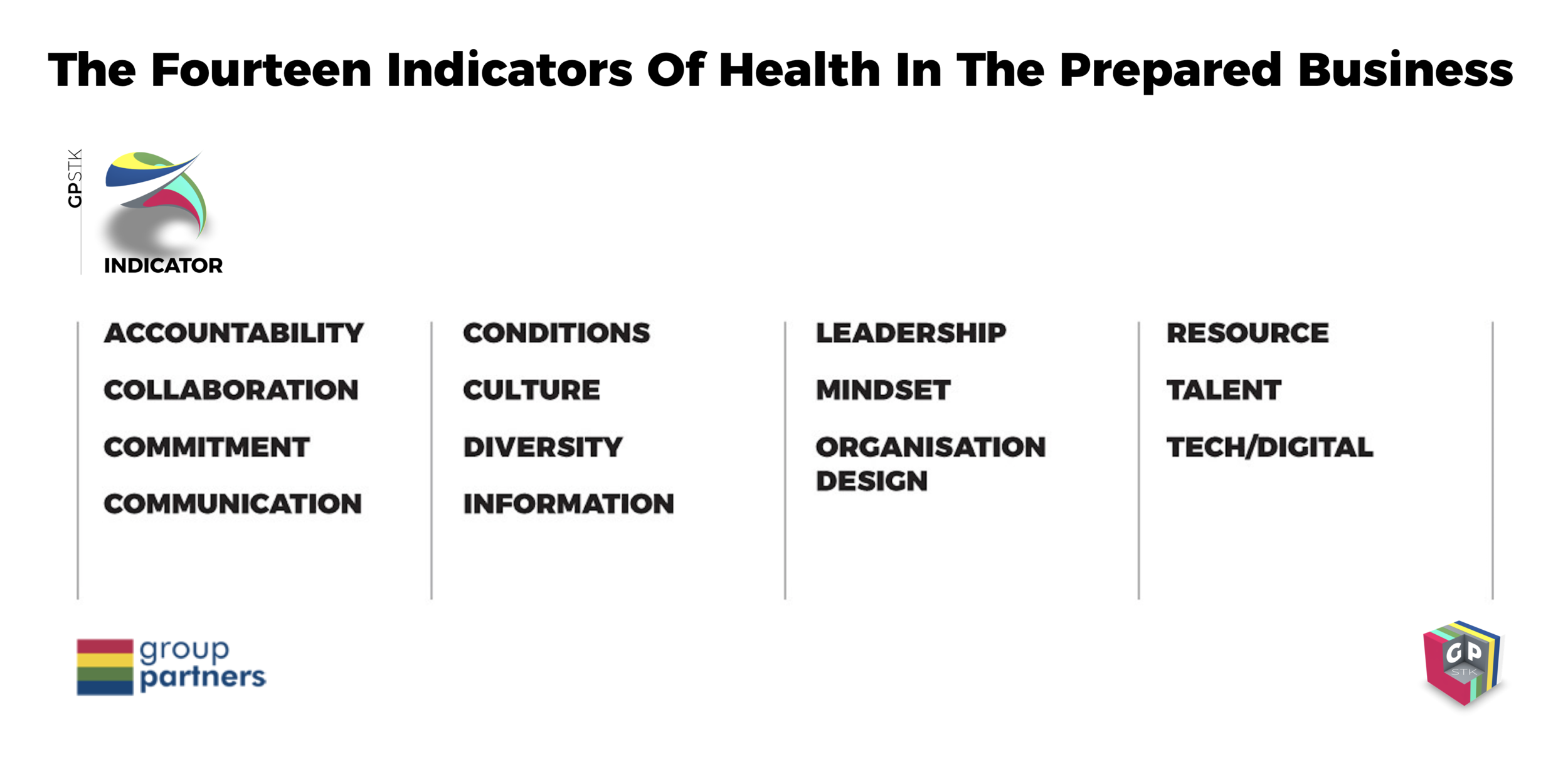
Below perspective 1 everything that we scan or examine is done through (up to) 14 lenses which give us the forensics for that organisation. These are what we refer to as the Indicators of the current status for each perspective and the tests we run for them. So - for example - to understand the Organisations DNA at a more granular level we would unpack each of the 3 dimensions by Indicator.
When we get to perspective 3 we are interested in the way they work across the spectrum - from strategy to execution - so we also examine against 10 core business areas that every organisation would recognise as making up their world
Because this is a deep dive into the organisation we break this examination down into 6 tests that represent a closed loop and where each test has a significant interdependency on the others.